ICFRC: Venezuela After Maduro and U.S. Strategy in the Western Hemisphere
Recorded: January 26, 2026
Runtime: 01:09:53
Listen to an audio podcast of this program.

For the last three years, the energy world has been fixated on the fits and starts of the Nord Stream natural gas pipeline, as changes in EU regulations and regulatory competencies, as well as pressure from key stakeholders, have kept the project under a big question mark. A July 2021 agreement between the US and Germany seemed to give a green light to the project. This presentation discusses the following issues:
1) What makes Nord Stream so complex from a regulatory and governance perspective, and how is this related to the specific materiality characteristics of natural gas as related to other fossil fuels?
2) What is the Russian context of the project, and how do Russian governance issues affect it?
3) Up to which point do the July 2021 agreements really mean the pipeline will be put in use?
4) What perspectives and challenges does the new "status quo" open for Ukraine?
Margarita M. Balmaceda is a political scientist working at the intersection of international relations, the political economy of authoritarianism and democracy, and technology, with a special expertise in energy politics (oil, natural gas, coal, nuclear, renewables), and commodities -- especially steel and the metallurgical sector-- in Ukraine, the former USSR, and the EU. She has a PhD in Politics from Princeton University and is Professor of Diplomacy and International Relations at Seton Hall University. Concurrently, she heads the Study Group on "Energy materiality: Infrastructure, Spatiality and Power" at the Hanse Wissenschaftskolleg (Germany) and is an Associate at the Harvard Ukrainian Research Institute at Harvard. Capitalizing on her Ukrainian, Russian, Hungarian and German skills, in addition to her native Spanish, she has conducted extensive field research in Ukraine, Russia, Belarus, Lithuania, Moldova, Hungary, Germany and Finland. Her new book, Russian Energy Chains: the Remaking of Technopolitics from Siberia to Ukraine to the European Union (Columbia University Press, 2021) analyzes how differences in the material characteristics of different types of energy can affect how different types of energy may be "used" as sources of foreign and domestic power. She is currently developing a project on metallurgy, conflict and political development and struggling through courses at the World Steel Association's Steel University.
For more information on the Foreign Relations Council visit their website at www.icfrc.org.
ICFRC: Venezuela After Maduro and U.S. Strategy in the Western Hemisphere
Recorded: January 26, 2026
Runtime: 01:09:53
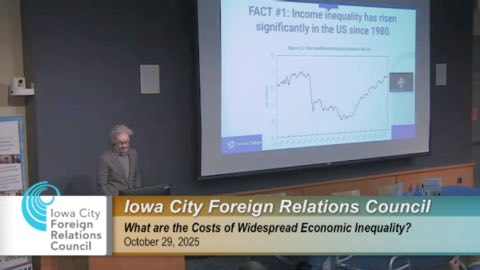
ICFRC: What are the Costs of Widespread Economic Inequality?
Recorded: October 29, 2025
Runtime: 01:24:15

ICFRC - Indigenous Strength - Food Sovereignty and Language Revitalization
Recorded: October 13, 2025
Runtime: 01:14:55
ICFRC - Kosovo's Cultural Survival Through Literature and Education
Recorded: October 9, 2025
Runtime: 00:50:51

ICFRC - Is the USA a Nation of Immigrants or a Deportation Nation?
Recorded: October 3, 2025
Runtime: 01:27:47

ICFRC - A Danish Nurse's Journey with MSF
Recorded: September 17, 2025
Runtime: 01:10:55
ICFRC - Flashpoint? Taiwan, China, and the United States
Recorded: May 15, 2025
Runtime: 01:07:53

ICFRC - Well Earth - Spices and Sustainability in Business and Agriculture
Recorded: April 16, 2025
Runtime: 00:59:58
ICFRC - When Archives Meet Authoritarianism
Recorded: April 11, 2025
Runtime: 01:00:09
Share this video on social media!


Share link (ctrl+c to copy)